Homesteading

I'm adding to this page as I can, check back often...
MORE TO COME!
|
America was founded on freedom. If we don't hold onto it, we won't have it. This song is called "Hold On To Your Freedom" and it is done by Jennifer Avalon. Much of her music is available to listen to or download. Give it a listen and see what you think.
|

| ||

These notes are from the Making a Living page.
An important thing you can do before you move to the homestead is educate yourself! In as many aspects of it as you can. One of the best ways to see to it that you have work from your homestead is to get medical training of some kind. There is demand for many different positions in the medical field in rural areas, from CNA (Certified Nursing Assistant) and Phlebotomy to other more advanced (and demanding) levels of medical care. Just remember a couple of things about all this: 1: Don't expect the higher pay you would receive by staying in the city; and 2: Try as much as possible to get as debt free as possible. The more debt free you are and the more marketable skills you have, the more assured you are to succeed in these rural areas where it is notoriously difficult to make a living.
One good way to prepare is to talk to homesteaders asking them any questions you may have. There are many forums that are good for that purpose. Links to some selected forums are listed below.

10 things to consider before leaving the city behind:
1: Write out your goals, even if they're vague to start with, seeing something in writing makes it more real. But try to make them as realistic and detailed as you can. You can fill in the vague areas as you learn more. Consider talking to those who are out there doing it, asking them questions and getting their thoughts. Some of these thoughts will help you gain knowledge you'll use.
2: Consider your spouse and your children. You'll need their help, so get their thoughts and feedback, both pros and cons. Homesteading can be done alone but it is much nicer to have your family beside you.
3: Realize that self-sufficiency of some sort is a requirement after you leave the city. The fire dept may not be able to get its engines and equipment out to you as fast as a building you own can burn down. The sheriff's dept likely cannot be available to stop a marauding critter (be it human or animal) if he's at the opposite end of the county from your homestead when the problem occurs. Can you handle defending yourself, family, property on your own....? You may have to do that very thing.
4: Realize what you're leaving behind in the cities. Do you enjoy the cultural things and entertainment found in the city? We don't have most of those things out here. Maybe a bowling alley and a movie theater but not much more than that. Fine restaurants may include a country style greasy spoon out on the highway (whose cook may make the best pies in the country, too). Plays will include the local schools that use crepe paper to make their costumes. While there is nothing wrong with any of these things, they may not be what you expect or are accustomed to in the city.
5: Realize that you cannot expect your neighbors, nor the local smalltown folk to act like your city neighbors and friends. They are used to their own ways and you should not try to force yours upon them. You left the city behind you, leave it there. Don't get upset that your neighbors stop in the middle of the road to chat. It's normal. Drive around them. Or join 'em. Don't expect them to drive 90 just because you do. If their dogs bark, remember that yours will too. If you don't have one, then get one. Dogs are a must on the homestead for a variety of reasons. Get a decent one, not one that will be obnoxious to your neighbors.
6: Know the zoning rules before you make your decisions to buy. There's little more disappointing than putting your hard earned money down and moving onto a place just to be informed that you can't have that flock of chickens or the milk goats you wanted for your self-suffiency. Usually the county courthouse can tell you where to get this information.
7: Something to consider is looking for a place that has a higher population of cows or chickens than people. Fewer zoning restrictions in places like that. More privacy, and freedom to make your own choices. And the further away from Walmart you are the better off you'll be.
8: Plan to start small. You don't need a mansion to live in, a massive barn, or too many animals to take care of. Plant a garden big enough to get something out of it but not so big that you can't take care of it. There's a lot to get used to. Ease into this. Don't overdo, you'll just burnout right away. If you start small and work into something bigger, you'll accomplish several things: it will help avoid burnout for you and your family, give yourself something to work toward, and you can stop expanding when you reach your realistic capacity. You won't run yourself too far into debt this way. There are plenty enough cash demands as it is. (Veterinary bills and auto repairs come to mind.) Don't start out thinking you need too much ''stuff''. Consider making a lifetime habit of living simply. You'll be teaching your children very valuable lessons. Neither you, nor they, will ever have to worry about keeping up with the joneses or going bankrupt by overextending your budget.
9: Plan on learning how to cook from scratch. Your food will taste better and be more nutritious. This will pay off in the long run in health benefits along with other things. You'll feel a lot better using what you've raised yourself. Your effort, your time, your money, all went to something that you've done, rather than having paid someone else to do it for you.
10 things to consider when writing out your goals, before and after you leave the city:
1: Get as much debt paid off as possible before you leave. It really bogs you down when things need to be done on the homestead. And since jobs can be scarce in most rual areas, you may not be able to count on the ability to make payments after your move. It also allows you to really enjoy your homestead without the demands on resources you may not have.
2: Leave the vices of drinking, smoking, and (illegal and/or unnecessary) drugs behind. They are just going to get in the way, sapping time, energy, resources, and true enjoyment of your homestead.
3: Grow as much of your own food as possible. Get better excercise and fresher air and water. These things are much healthier for you. Knowing where your food came from and how it was grown is much better for your peace of mind. As mentioned above, learn to cook real food; food you grow yourself. Gives great satisfaction. And anything that comes from a box likely has as much flavor and nutrition as the box it came in has.
4: A rural lifestyle is normally much better for your children if you have them. As is them knowing where their food came from...how it got from the farmyard to their dinner plate. They can learn the value of hard work, team work, and togetherness in your family, IF you teach them these values when they are young enough to learn them. And they just may pay off when you're old and need their help.
5. You can teach your children communication as you work side by side with them. Many kids who grow up on their parents' homestead enjoy the time spent with, and working alongside, their parents. It develops a special bonding in the relationship. And there's little more satisfying than telling your child he or she did a great job today. This is not to mention the 'potato fights' in the garden after a long day of digging them, in order to lighten the mood. Cultivate a good relationship with them, seasoned with gentleness, kindness and lots of encouragement along with proper discipline. Again doing these things just might reward you when you are old and need their help. Then you will know you did your job well. I'd rather live a shorter life with my family around me than a longer one alone or long forgotten in a nursing home someplace.
6. Get involved with a local church after you move if at all possible. The folks there can be your network of friends and support during the hard times to come. And hard times do come along on a homestead. For a variety of reasons. Knowing these things in advance can help you make it through when -not if- bad things happen.
7. Take time. Not just to smell the roses but also to plant a few. Spend a bit of extra time with a neighbor having coffee or helping him or her with something that needs done. Neighbor helping neighbor is what true community is all about. And it helps break up the drudgery of your own daily labors.
8: Take a walk. Enjoy your surroundings. Get some fresh air. Remember the reasons you left the city life behind. These things can help you get recentered. Back to where you want to be.
Resources:
Here's another discussion group: Homestead Work these folk are pretty particular about staying on topic.
One of the main purposes of homesteading is to simplify your life. Lamar has written a how to book on building a cabin, solar power, composting toilets... and more, all with simplicity in mind. You can see photos of his place and purchase the book here: SimpleSolarHomesteading I bought the book in PDF and think it's worth more than the $5 price tag for the download.
BackwoodsHome, BackHomeMagazine, Countryside & Small Stock Journal and magazines feature articles written by homesteaders that can help a you gain knowledge in many different areas.
The best book on the market, in my opinion, is the late Carla Emery's book on homesteading, called The Encyclopedia of Country Living I have several editions of this book. Worth its weight in gold. It is a book filled with how-tos on just about everything related to the homestead.
Here are the seed companies I do business with nearly every year:
Heirloom Acres Seeds -This is the company I order the most from currently. They have a great selection of heirloom and open pollinated seeds and the best prices I've seen for the larger packets. Based in Missouri.
Baker's Seeds -This company also specializes in heirloom and open pollinated seeds with the best selection anywhere! They used to have the best prices on the larger packets but they seem to be moving away from that. Based in Missouri. Seeds Trust/High Altitude Gardens -I have done business with this company since the mid 80s. They have some tomato and pepper varieties that I haven't been able to find anywhere else. They specialize in cold climate growing and their seeds reflect that. I have had their seeds out-perform many others in our cold climate. Was based in Southern Idaho, but moved to Arizona for his father's health. |
Here are some outfits that I do business with on a fairly regular basis:Johnny's Selected Seeds -They've been around for years and have a great selection of seeds. Both hybrid and some OP. Based in Maine
Pinetree Garden Seeds -If you want to try out a variety of seeds before you buy a large amount of them, these folk have a decent supply in small packets. Small prices to match. OP and hybrid. Based in Maine Nichol's Garden Nursery -Based in Oregon Bountiful Gardens -Specializes in sustainable growing. OP and heirloom seeds available. By the author of one of the best books on gardening available "How to Grow More Vegetables..." |

Seeds Trust published its first High Altitude Gardens catalog in 1984. In 1998 we began using the Internet as a more efficient method to reach...
© 2009 - Seeds Trust
Project Self Reliance is an educational, non-profit organization providing sustainably oriented social services and programs for youth-at-risk and...
© 2010 - Seeds Trust
Have a homestead story to tell?
Submit your story to be posted here: HOMESTEAD STORIES
And I will consider it and possibly post it on the site. Stories can be humorous, sad, glad, new homesteading, how you got started.... etc
If you've ever thought about, or are presently thinking about, or wish you could make a move to Montana, here is a list of sites with more information.
Montana in Pictures
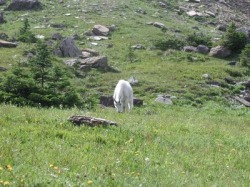
Montana, The Last Best Place.
Photo taken in Glacier Nat'l Park |
Information about Montana:
|
What is that dollar worth?
Everyone knows that you just can't buy what you used to for that hard earned dollar. Prices of goods and services really aren't rising. The value of the dollar is lowering. Try this to see how far it has dropped in under a hundred years... |

